Book Project
My book project develops a novel theory to explain the full spectrum of counterproliferation behavior of states. I start by developing a typology of counterproliferation strategies. A state facing the prospect of a counterpart developing nuclear weapons has five options. First, it can launch a military attack on the key nuclear facilities of the proliferant. I call this kinetic reversion. Second, the counterproliferator can threaten military action to coerce the proliferant to halt its pursuit of the bomb. I call this strategy military coercion. Third, the counterproliferator can use its diplomatic and economic leverage over the proliferant, if present, to persuade it to give up its pursuit of the bomb. This strategy is called diplomatic inhibition. Fourth, the counterproliferator can try to pool resources with a great power ally to stop the proliferant’s weapons program. I call this strategy pooled prevention. Finally, a counterproliferator may choose not to do anything to stop the proliferant. This strategy is called accommodation.
I argue that a counterproliferator’s choice of strategy is determined by its expected change in the balance of power as a result of the proliferant successfully acquiring nuclear weapons. States that expect a large decline in the relative balance of power consider costly strategies like kinetic reversion before diplomatic options. Small, conventionally capable states perceive an existential threat from large rivals with nuclear weapons. They believe they can defend themselves against conventional attacks but would be obliterated by a few nuclear bombs. On the other hand, states that expect a smaller decline in the relative balance of power consider the less risky diplomatic inhibition as their first option. Such less motivated counterproliferators threaten military attack, that is, choose military coercion, only when they lack credible diplomatic leverage to bargain with the proliferant. States that neither have the diplomatic leverage nor the military capability for preventive strikes attempt to pool resources with a great power ally, if available, in their counterproliferation efforts. In other words, they choose pooled prevention. If they do not have a great power ally, they choose to accommodate, or live with, the nuclear weapons program of the proliferant.
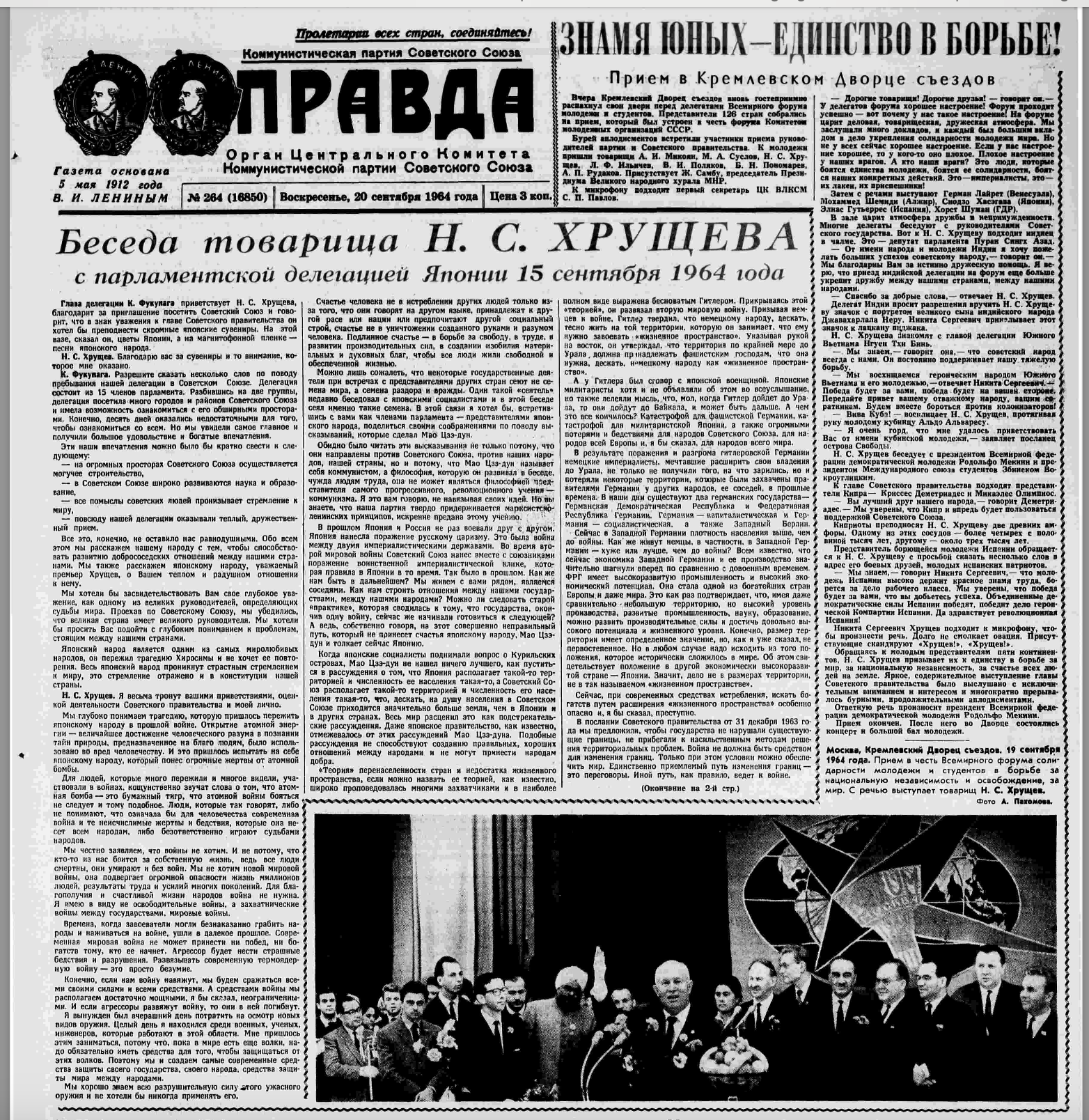
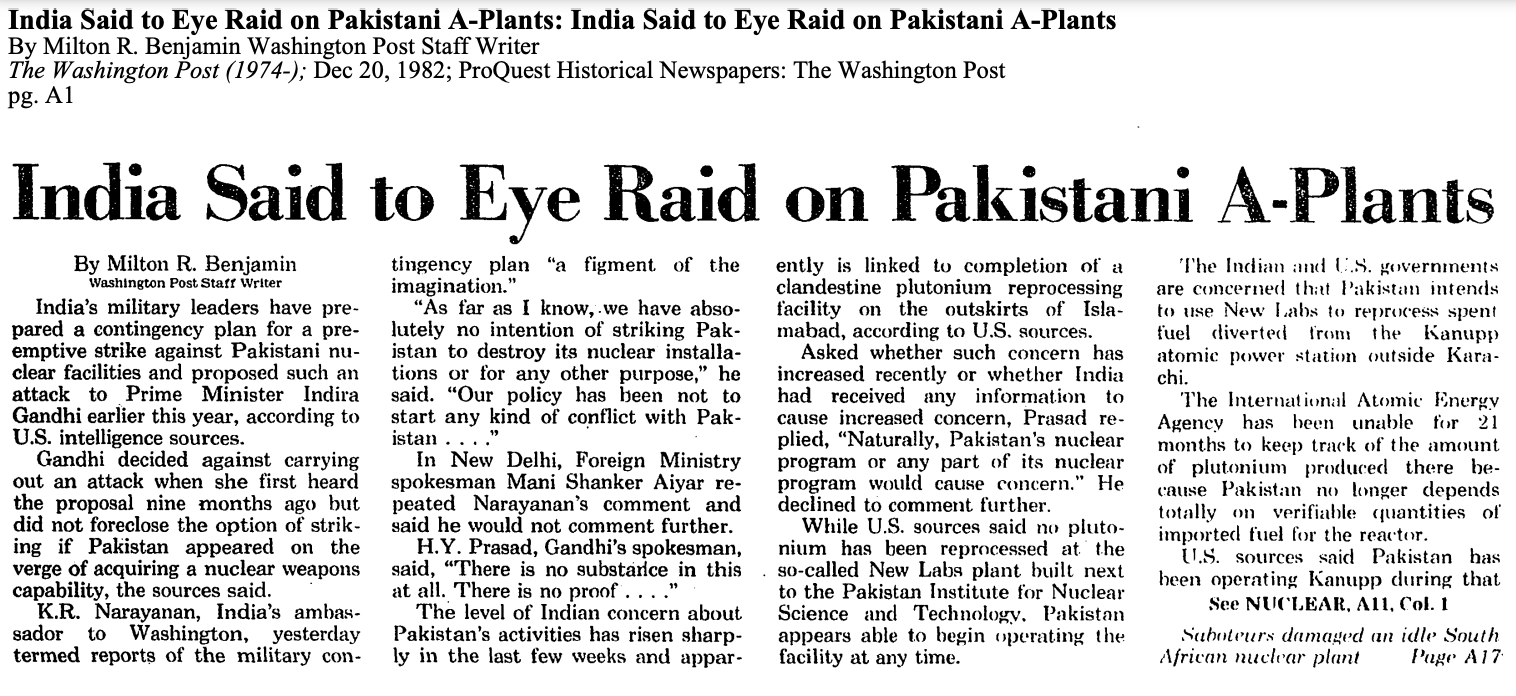
I test this theory on three sets of cases. In the first, I choose one counterproliferator, Israel, that went up against three proliferants — Iraq, Syria, and Iran. Israel chose kinetic reversion against Iraq and Syria but selected a combination of pooled prevention and military coercion against Iran. In the second, I compare the counterproliferation strategies pursued by India and Pakistan against each other. India chose a mix of diplomatic inhibition and military coercion, whereas Pakistan selected only diplomatic inhibition. In the final set, I choose one proliferant, China, being stopped by three counterproliferators, namely the United States, Taiwan, and the Soviet Union. The United States chose to accommodate the Chinese nuclear weapons program after considering kinetic reversion. Taiwan chose a combination of pooled prevention and military coercion. Lastly, the Soviet Union first selected accommodation before moving to diplomatic inhibition after the Sino-Soviet split. These cases cover all five strategies and include counterproliferators with both high and low levels of motivation. This research design of keeping either the proliferant or the counterproliferator constant and then varying the other helps me find the precise effect of independent variables on the eventual choice of strategy. For this project, I conducted elite interviews in India and Israel. I interviewed top national security officials, including a former prime minister, former cabinet ministers, national security advisers, military intelligence personnel, air force commanders, nuclear scientists, and several top diplomats and bureaucrats.
 Kunal Singh